The story of Creation as the Bible tells it, says Author Robert Graves, ain’t necessarily so. In fact, the Book of Genesis has the story so mixed up that the creation of Eve from Adam’s rib, for instance, is really the misreading of a picture of one man killing another with a curved knife (hence the rib) in a quarrel over a woman. Graves’s go at Genesis is more than a scholarly quirk from a quirky man of letters; it is part of a campaign. For Poet-Novelist-Essayist-Historian Graves is also a devotee of the Divine Female who appears under one name or another in the world’s myths and religions. In past books, such as King Jesus (TIME, Sept. 30, 1946), he has taken up arms in her behalf against what he considers the anti-feminist conspiracy of Judaism and Christianity. His latest book, Adam’s Rib (Yoseloff; $6), is an effort to rescue another archetype of the goddess—this time Eve—from her subordinate role in the order of creation. A Lick from a Cow. The Genesis version of what happened in the Garden of Eden, says Graves, is the result of a process he calls”iconotropy”—the misreading of pictures and symbols from one culture to fit the religious bias of another. He cites the familiar myth of Europa and the bull as an example of this process: the Greeks developed the patriarchal Zeus cult at the expense of the once sovereign “Moon-goddess” by interpreting a Cretan icon of the “Goddess dominating the Minos Bull by riding on its back, as though Zeus, in bull disguise, were carrying off the maiden Europa to ravish her at his leisure.” Graves’s theory is that the first four chapters of Genesis were written by a priest living in Jerusalem after the return of the Jews from exile in Babylonia. His priestly narrator was familiar with pre-exilic creation stories, and he used a set of Mycenaeo-Edomite pictorial tablets “given to, or taken by, Joshua’s invading Israelites when they seized Hebron.” But either deliberately or through ignorance, he read the tablets in the wrong order and with the wrong cast of characters. This resulted in various anomalies, such as the story of Eve’s creation from Adam’s rib—”equaled in perversity only by the post-Homeric Greek legends of Athene’s birth from the head of Zeus, and Dionysus’ birth from his thigh.” For in all primitive myth, says the Goddess’ Graves, “the female, not the male, gives life, even if she is no more than a primordial Scandinavian cow licking stones into human shape.” As the Ox Plows. Graves goes one better than mere verbal theorizing—he has pictorially theorized the original tablets in collaboration with Artist James Metcalf, who engraves them in a modern version of sub-Mycenaean style. He arranges his pictures first in the order in which the Bible has them—four sequences of nine, each sequence running from right to left. Then he arranges them in what he postulates as the original order—four sequences of nine, running alternately from right to left, then left to right, the order known from the Greek as boustrophedon, “as the ox plows.” For instance, he says, the five pictures the Genesis author interpreted as 1) the creation of Eve, 2) the description of Man and Woman, 3) the temptation of Eve and the apple-eating, 4) the making of fig-leaf aprons, 5) the confrontation with God, tell quite a different story when considered in reverse order. First, according to Graves’s reading of the Hebron chronicle, comes No. 5—not God discovering a hiding Adam and Eve, but a man named Agenor finding his twin brother Belus making love to a girl named Hebe. The fig-leaf episode (No. 4) is the surprised lovers guiltily covering their nakedness, during which Hebe falls for Agenor, and in No. 3 is advised by the Serpent Death to give Belus an apple from the Serpent’s tree. The apple drugs Belus into unconsciousness (No. 2), whereupon Hebe tells Agenor to finish his brother off, which he does with his curved knife (No. 1)—the scene interpreted by the author of Genesis as God performing the famous operation on Adam. Whether or not the rib was Adam’s—it is certainly Graves’s.
-Time
Quatro hardcover with dust jacket. 73pp. 1st American edition. Red cloth over boards. Gilt titles on spine. Tips bumped. Head and toe of spine also lightly bumped. Off white dust jacket is intact. Nicks and small voids at all 6 corners. Currently in a mylar sleeve. Binding is sound. Oxidation/foxing to inside front and rear covers and ffep. Does not effect text which is bright and clean. Signed by Graves and Metcalf on limitation page. Numbered 50 out of 100. VG.

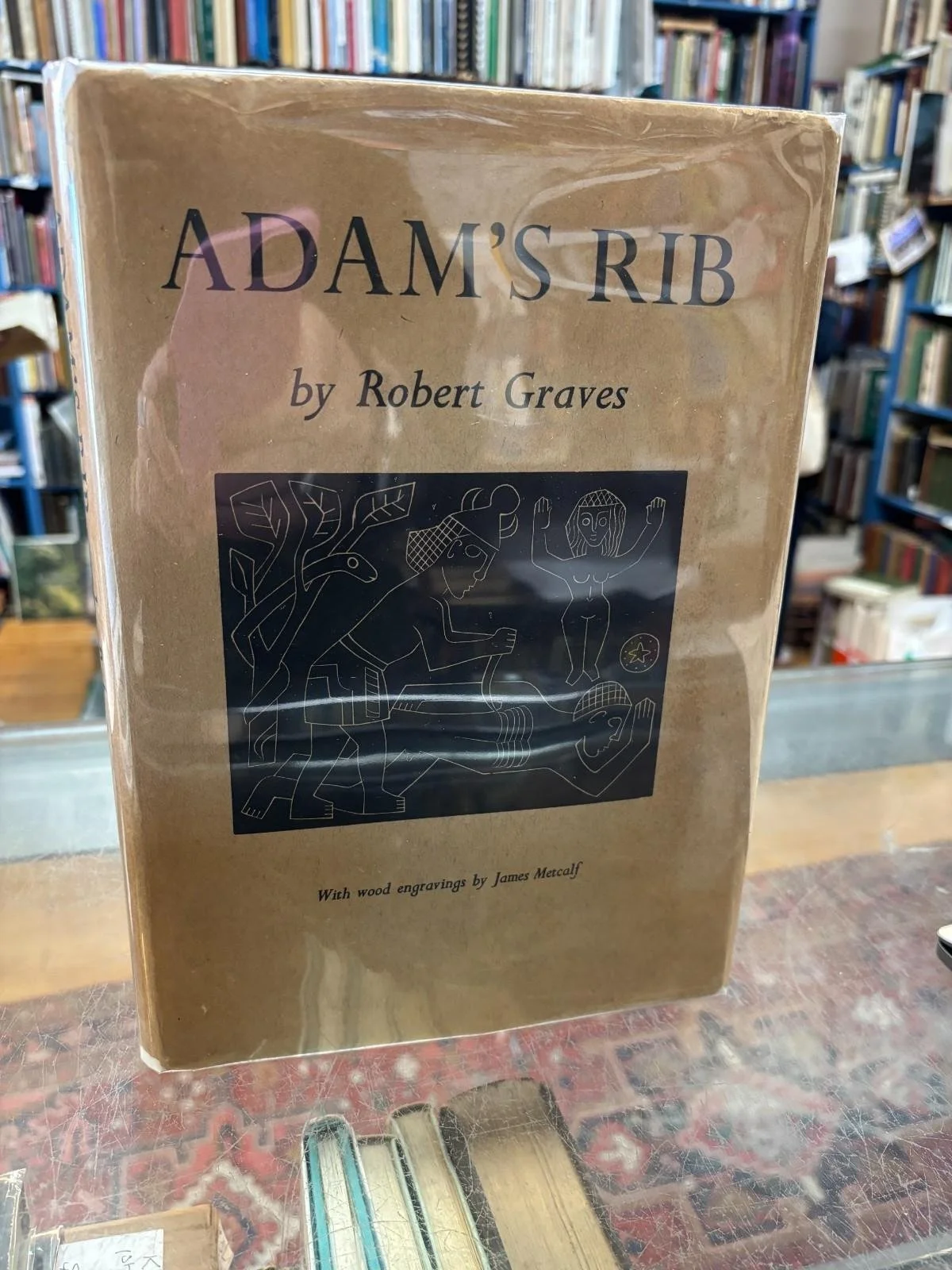 Image 1 of 13
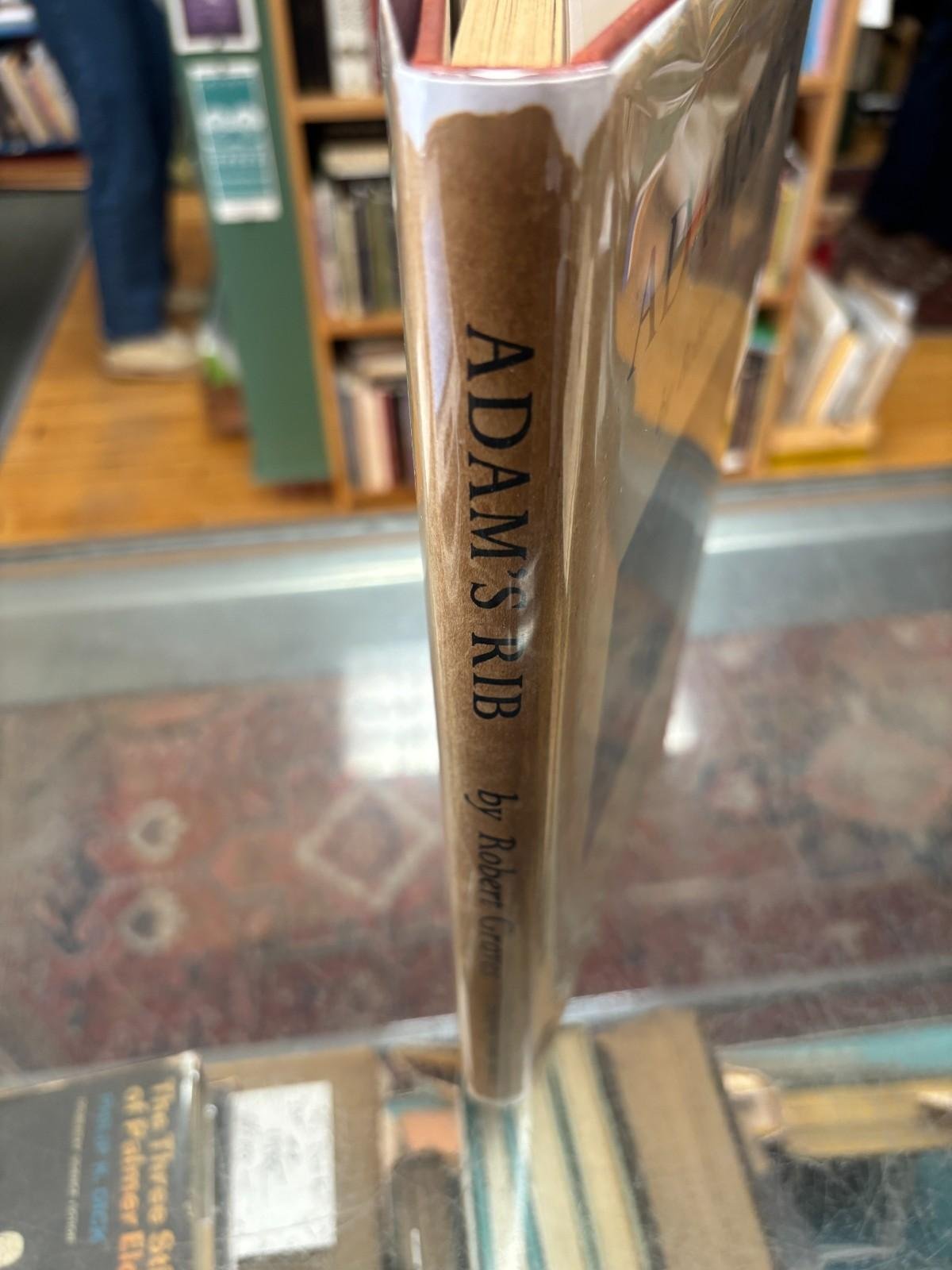 Image 2 of 13
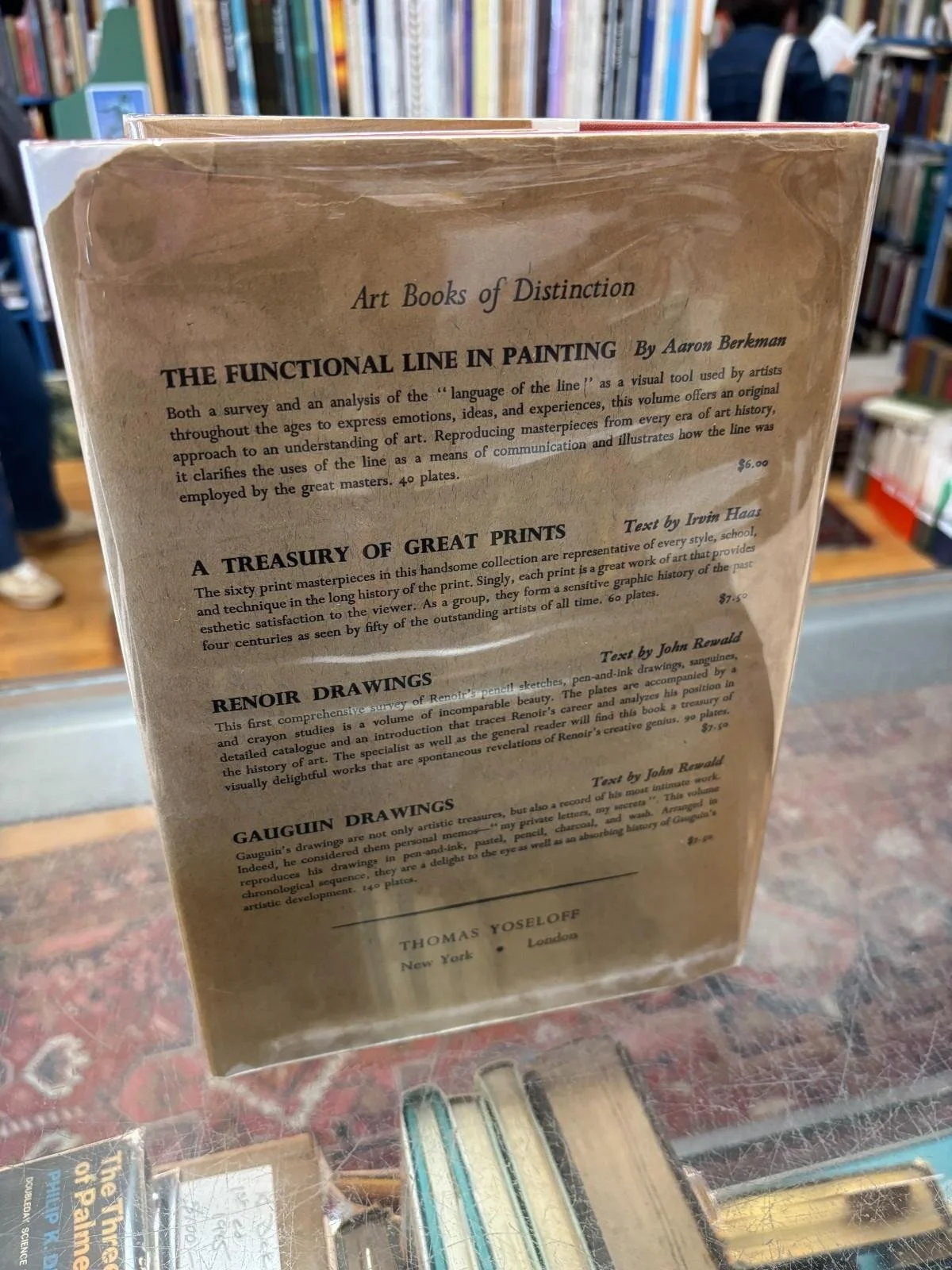 Image 3 of 13
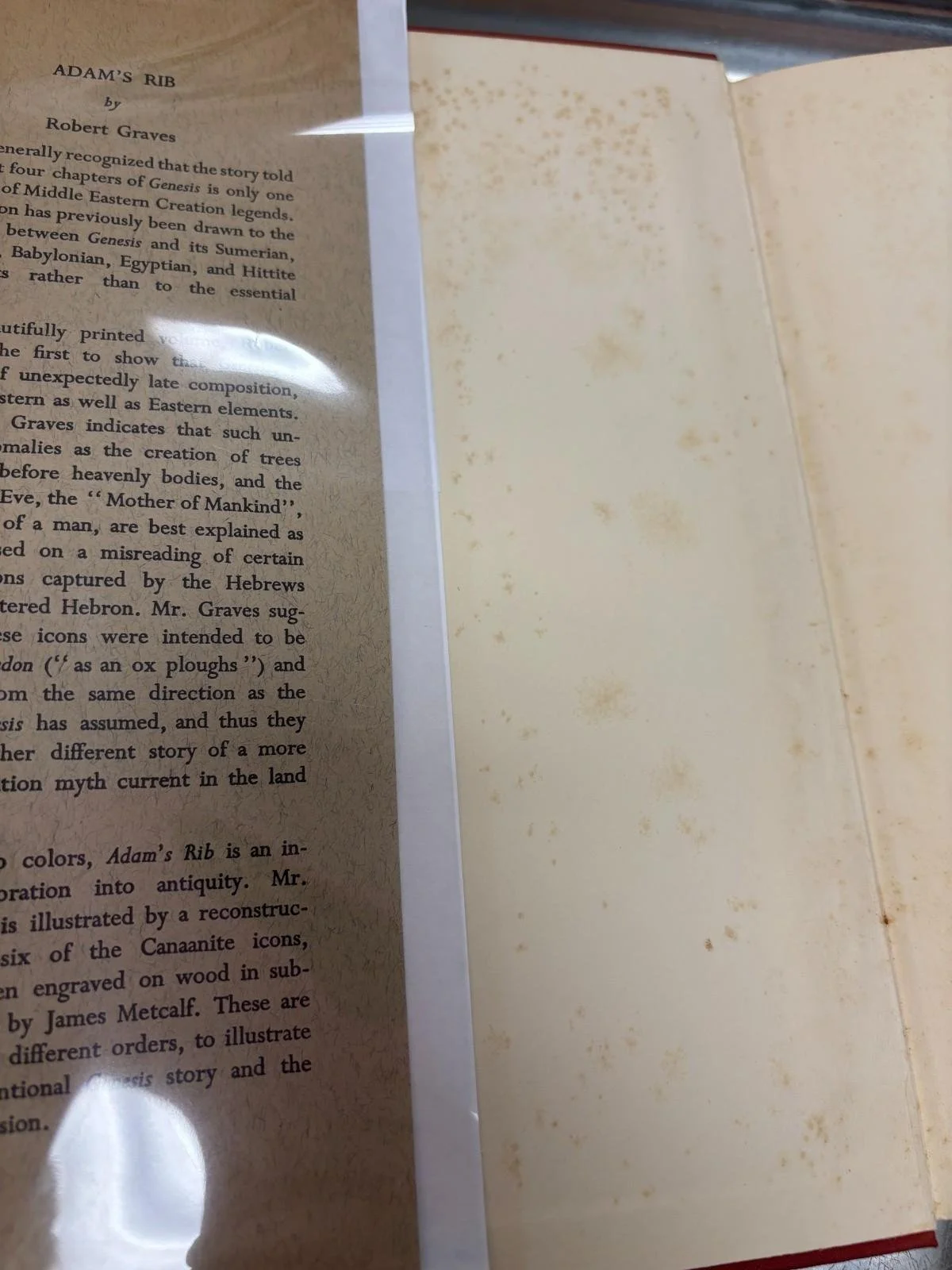 Image 4 of 13
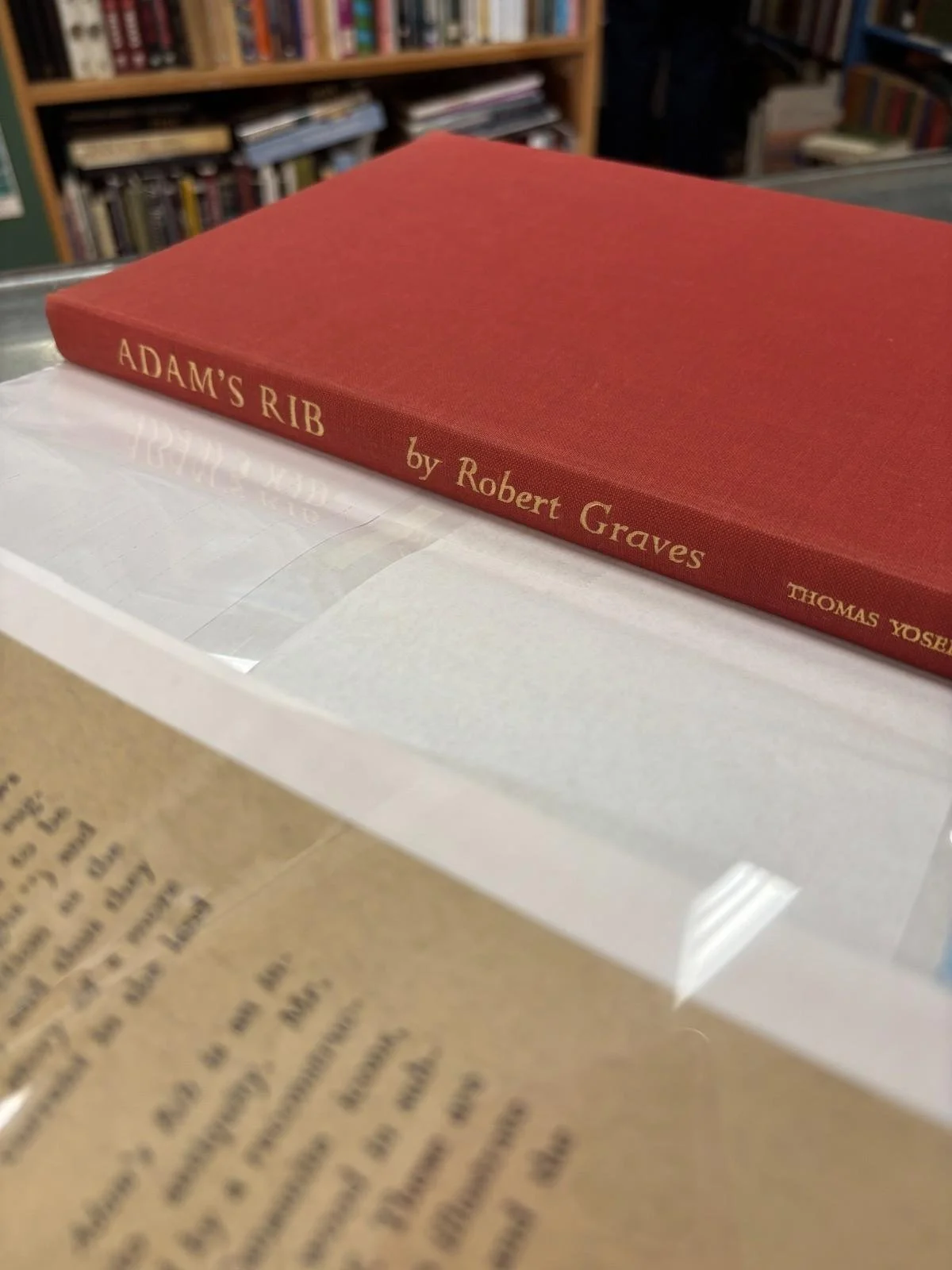 Image 5 of 13
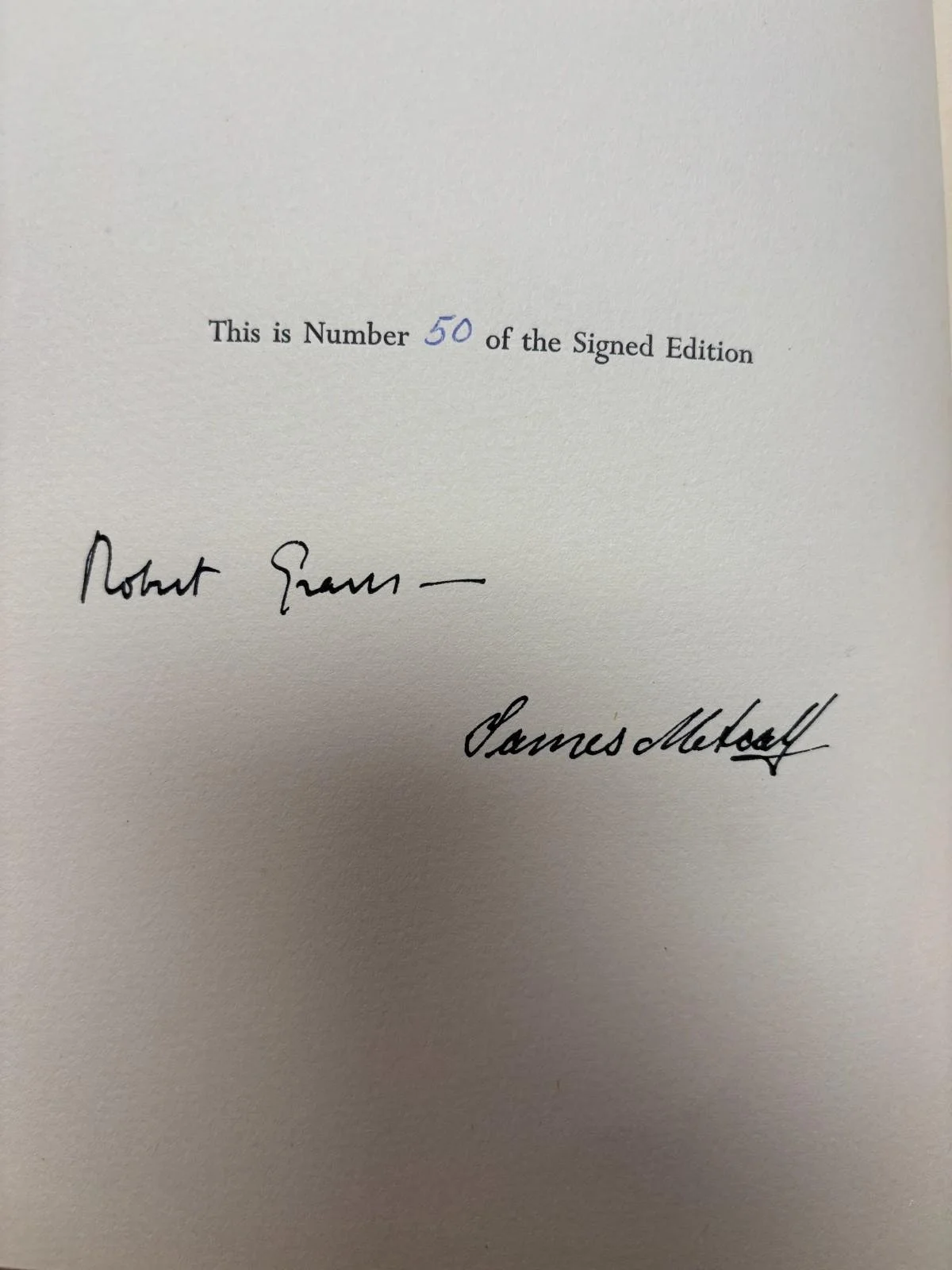 Image 6 of 13
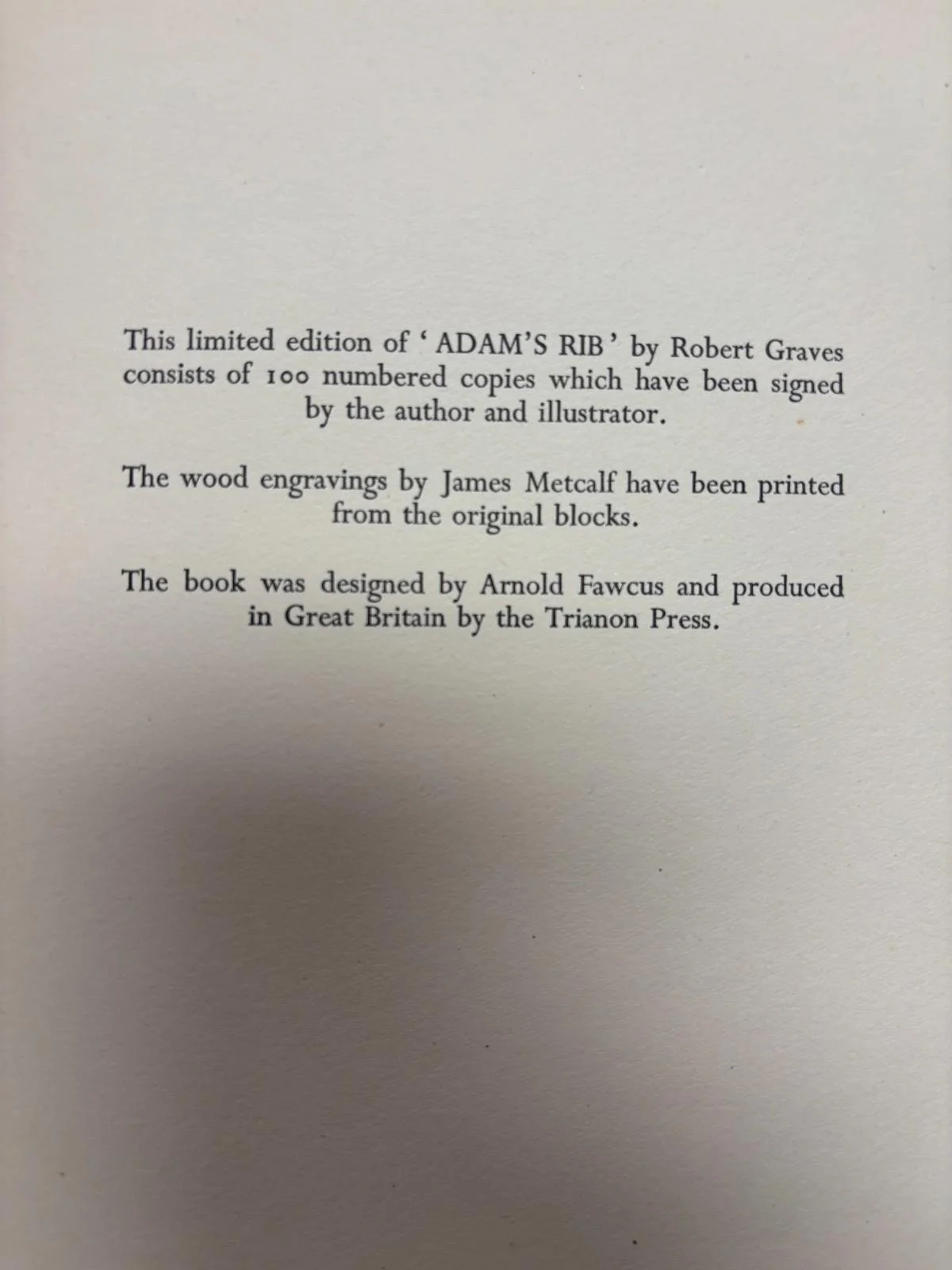 Image 7 of 13
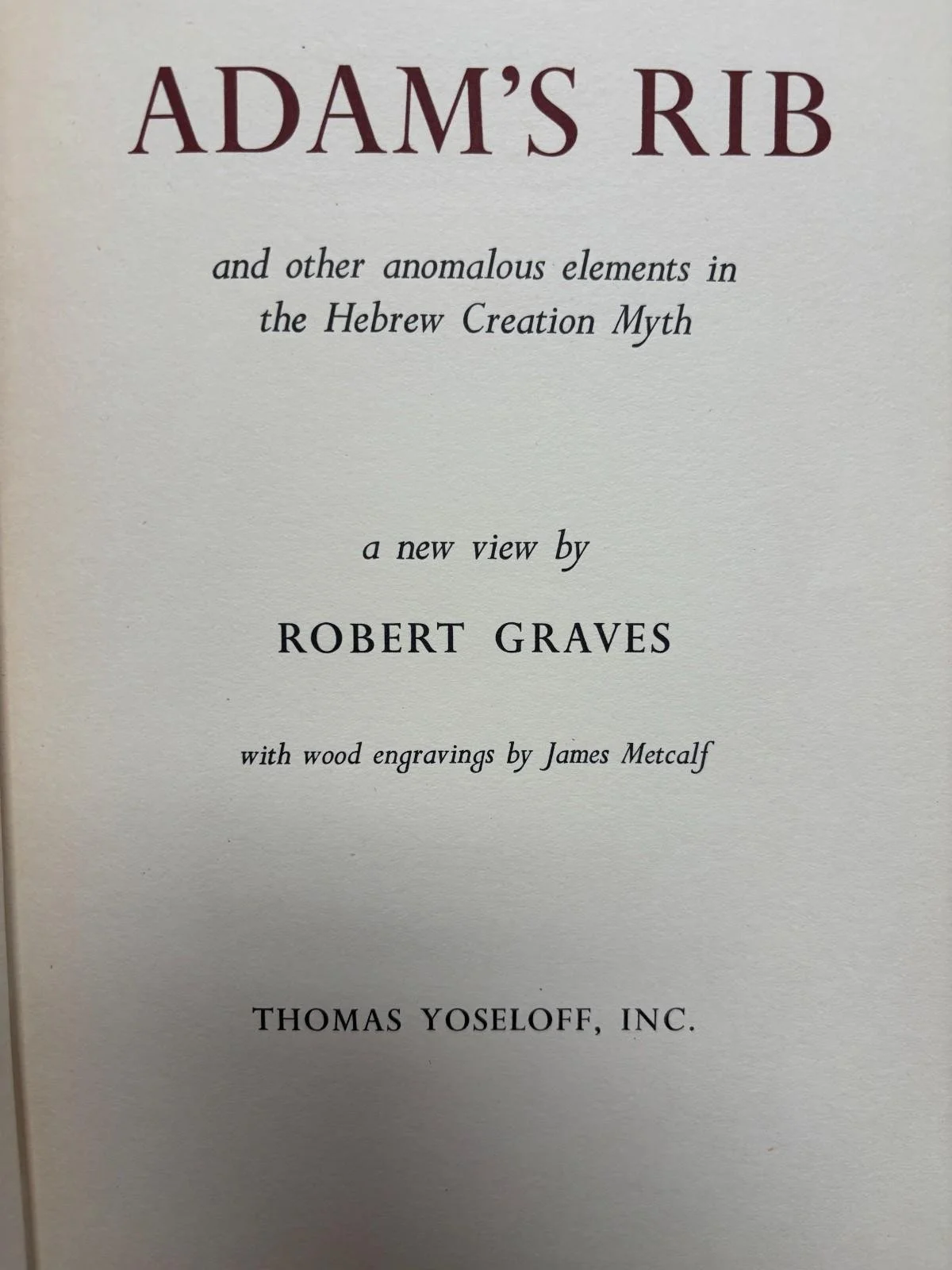 Image 8 of 13
 Image 9 of 13
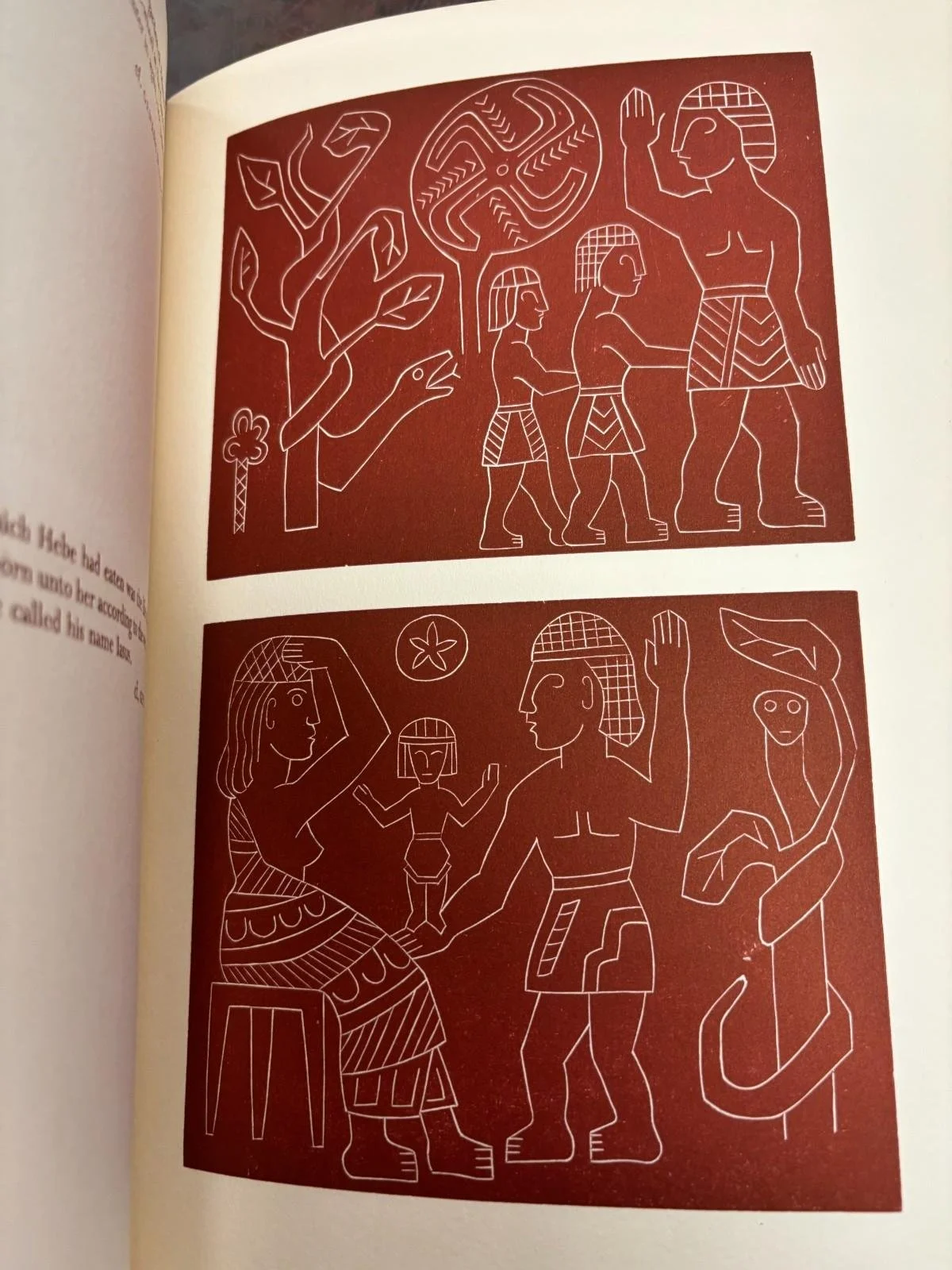 Image 10 of 13
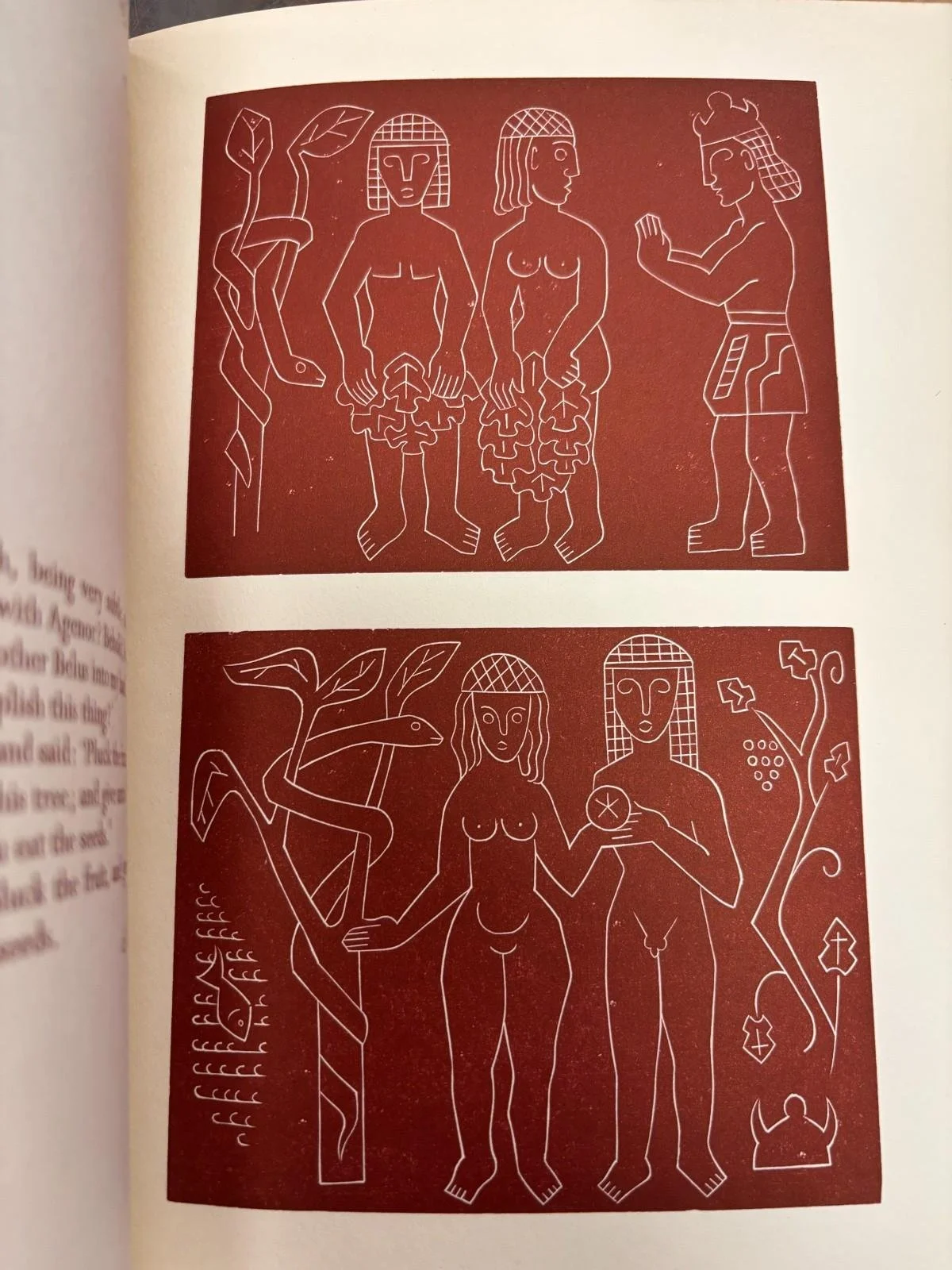 Image 11 of 13
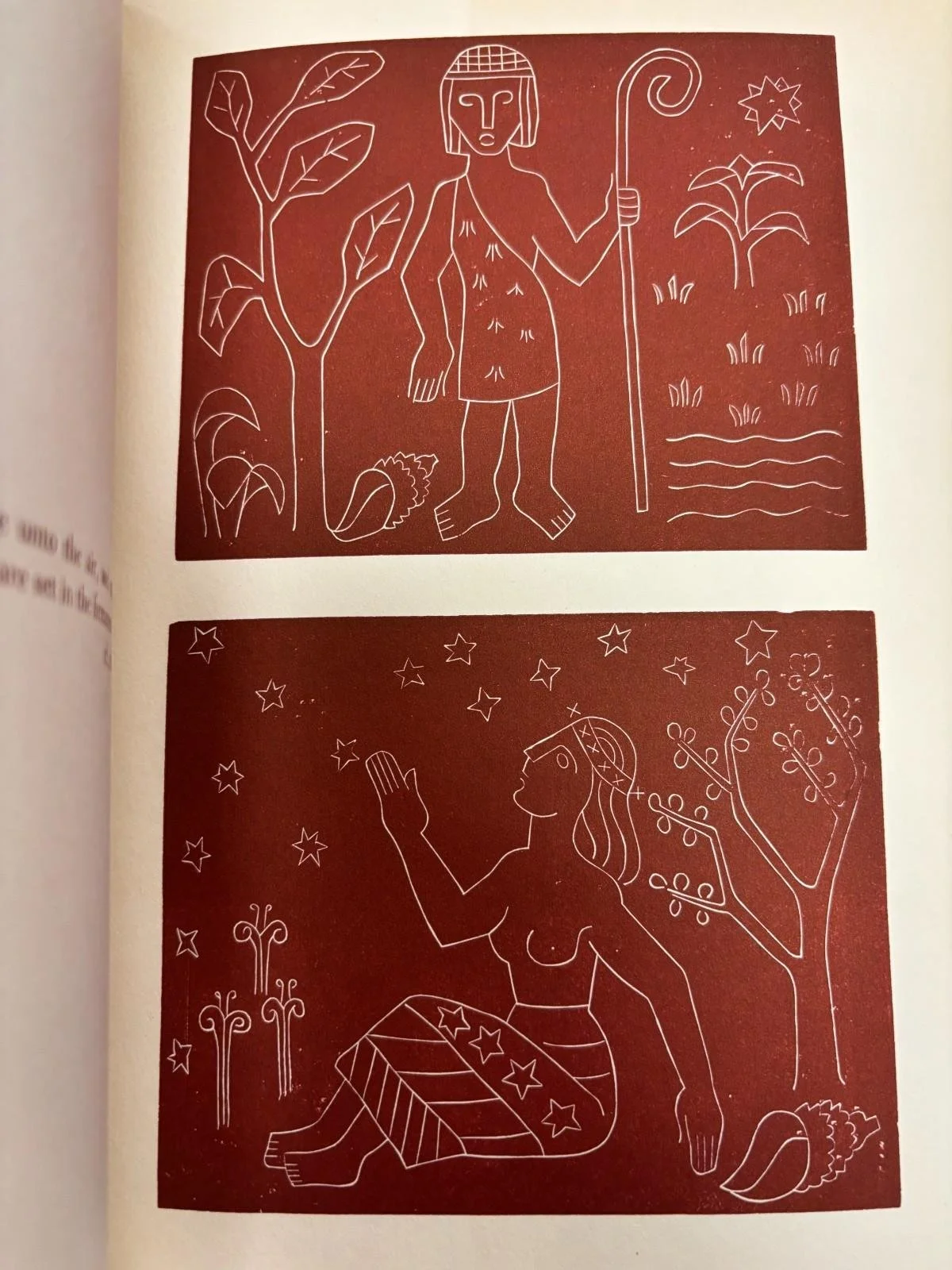 Image 12 of 13
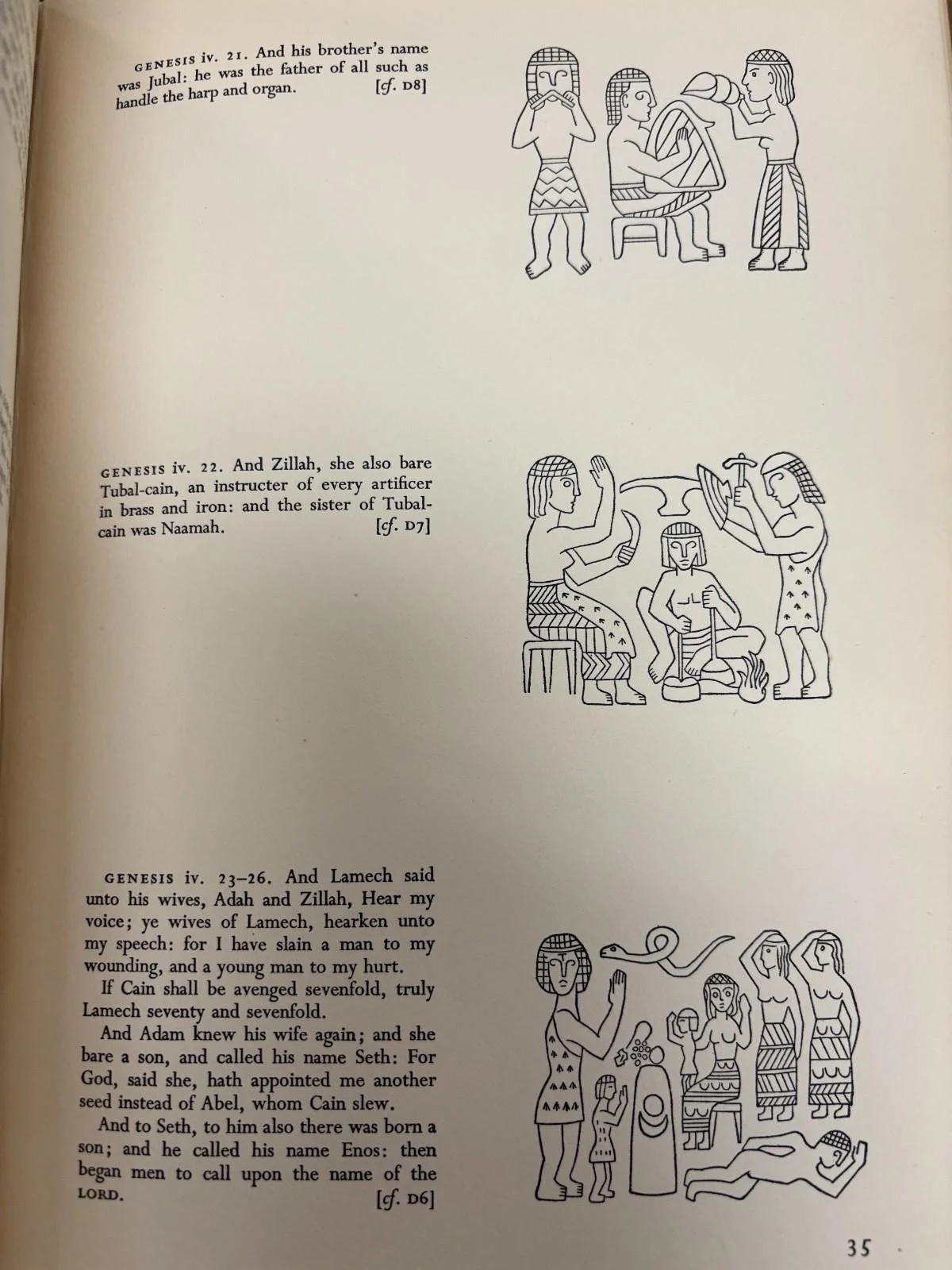 Image 13 of 13